Resin Bound Driveway in Norwich
A resin bound driveway is a mix of natural aggregate and clear resin trowelled over a solid base to form a smooth, permeable surface with no loose stones. In Norwich, a resin bound driveway lasts 15 to 20 years and drains rainwater through the surface, so it normally needs no planning permission.
What is a resin bound driveway?
When searching for a modern driveway solution in Norwich, resin bound surfacing offers something that block paving and tarmac cannot: a smooth, contemporary finish that looks good and performs well.
Your driveway must be able to deal with Norwich’s climate, which includes heavy summer UV exposure, freeze-thaw cycles, and frequent rainfall. When installed correctly with UV-stable binders and proper base preparation, a resin driveway provides a durable finish that resists the common fading, cracking, and settling issues that affect other materials.
Resin bound vs resin bonded: what is the difference?
Resin bound mixes the aggregate through the resin and trowels the whole mix onto the base. The result is smooth, permeable, and holds every stone in place.
Resin bonded spreads resin onto the base and scatters loose aggregate over the top. It looks similar in a photograph, costs less, is not permeable, and sheds stone.
The two are often quoted against each other without the difference being explained. If you are comparing prices and one is noticeably cheaper, check which of the two you are being offered. We install resin bound.
How much does a Resin Driveway cost in Norwich?
The base decides the price, and this is where resin quotes diverge most.
Resin laid over a sound existing tarmac or concrete base is a surface job. Resin that includes building a new base from scratch is a groundworks job with a surface on top. They are not two prices for the same work — they are two different jobs, and the second costs considerably more.
Before comparing any two resin quotes, check whether each one includes a new base. If one is noticeably cheaper, that is almost always why.
The other thing worth checking is whether you are being quoted for resin bound or resin bonded. Bound mixes the aggregate through the resin and is smooth and permeable. Bonded scatters loose stone over resin, costs less, is not permeable, and sheds gravel. They look similar in a photograph.
Every quote we give is free, fixed and itemised, and states clearly whether a new base is included. Call 01603 858680.
Do resin driveways need planning permission in Norfolk?
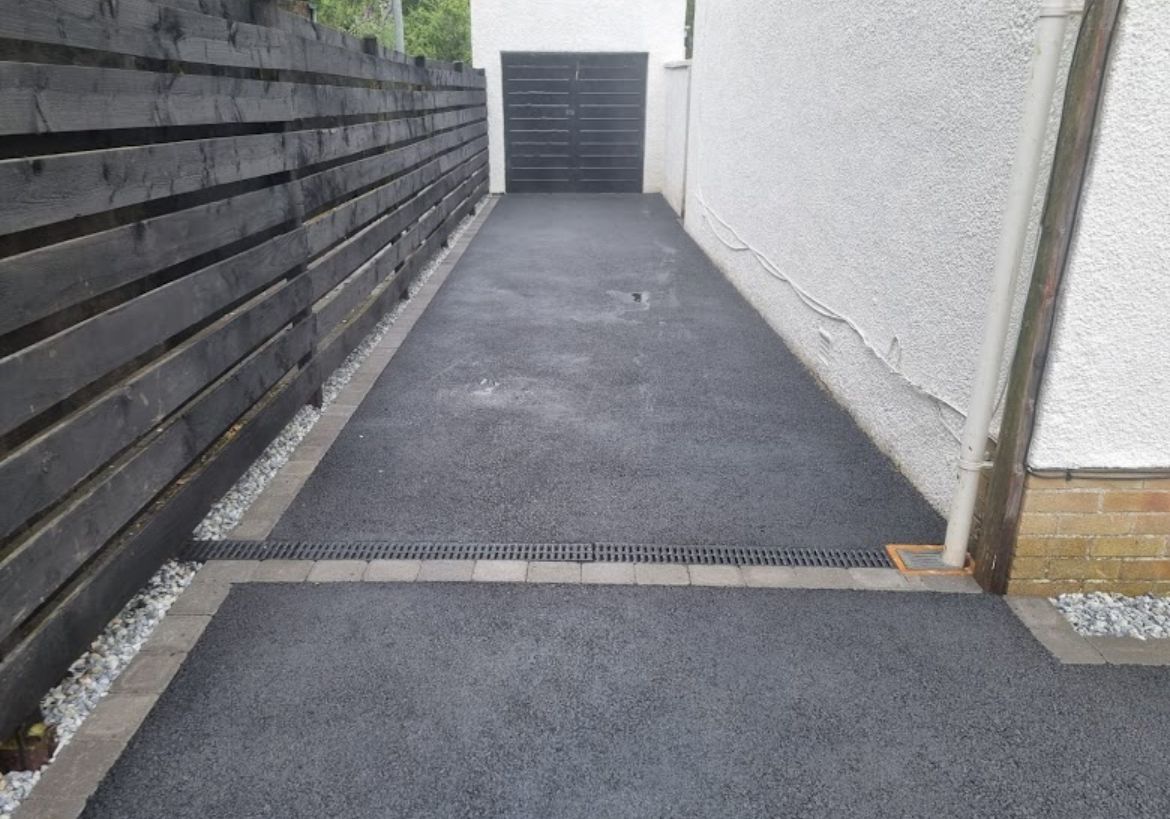
Resin bound is permeable, water drains through the surface into the base below rather than running off onto the road. Because of that, it normally falls outside the planning permission requirement that applies to impermeable front-garden surfaces over 5m².
That is a real practical advantage over tarmac and non-permeable block paving, and one of the main reasons Norwich homeowners choose it. Always confirm with your local planning authority before work starts, for Norwich that is Norwich City Council, Broadland or South Norfolk depending on where you are.
If you are creating a new vehicle access from the road, you will separately need a dropped kerb from Norfolk County Council.
How to Protect Your Norwich Resin Driveway from UV Degradation
UV degradation is a real concern with lower-quality resin. Norwich’s regular sun exposure means UV rays can cause oxidation over time. The binder can gradually break down, causing the surface to lose colour and shine, even when the structure remains sound. To protect your driveway, we follow a proven 3 step installation process. Here’s how each step works:
Step 1
Subgrade Preparation
Step 2
Hardcore Base
Step 3
The Resin Bound Surfacing
Areas we cover for Resin Driveways
We install resin bound driveways across Norwich and Norfolk, including Thorpe St Andrew, Sprowston, Costessey, Hellesdon, Wymondham, Dereham, Cromer and Sheringham. See all areas we cover.
Resin driveway FAQs
How much should a resin driveway cost?
It depends almost entirely on the base. Resin laid over a sound existing tarmac or concrete base costs considerably less than a job that includes building a new base from scratch. Ask any quote to state clearly whether a new base is included — that is usually the whole difference between two prices.
What are the negatives of resin driveways?
Resin bound needs a solid, well-drained base and cannot be laid onto soil or loose hardcore. It costs more per square metre than tarmac. Repairs to a damaged patch remain visible, because new resin cures slightly differently from resin that has been down for years. It also cannot be laid in wet or near-freezing conditions.
What happens to a resin bound driveway after 5 years?
A properly installed resin bound driveway looks much the same at five years as at one. Some UV fading of the resin is normal and shows most on very pale aggregates. Any loose stone appears in the first few months, not later. Problems at the five-year mark almost always trace back to the base rather than the resin.
Can I jet wash a resin drive?
Yes, at low to moderate pressure with a fan nozzle held around 20cm from the surface. Avoid a turbo or pencil nozzle held close, which can lift aggregate. Once or twice a year is enough in Norfolk, plus occasional brushing to keep leaf litter and moss off the surface.
Is a resin driveway permeable, and do I need planning permission?
A resin bound driveway is permeable: water drains through the surface into the base below. Because it is permeable, it normally falls outside the planning permission requirement for impermeable front-garden surfaces over 5m². Confirm with your local planning authority before starting work.
How long does a resin driveway take to install?
On a sound existing base, a typical domestic resin bound driveway is laid in one day, can be walked on after around six hours and driven on after 24. If a new base is required, allow three to five days including excavation, sub-base and curing.