Block Paving Driveway in Norwich
Expert Block Paving Installation & Restoration
When you’re looking for block paving Driveway in Norwich, you’re not just choosing a surface, you’re making a long-term investment in your home’s appearance and strength, which can last over 15 years.
We have installed hundreds of block paving driveways in Norwich, Thorpe St Andrew, and Sprowston, and we understand what makes a driveway last compared to one that may start to sink or crack after just a few years.
Your driveway is exposed to the changing weather conditions in Norwich, which include freezing and thawing temperatures during the winter, consistent heavy rainfall throughout the year, and the naturally clay-rich soil that is common in Norfolk.
Many homeowners are not aware that the visible part of the driveway is only part of the story. The actual performance and longevity of your driveway depend on the sub-base, how the blocks are laid, and the quality of the joint sand used.
Get A Free Quote Today
Get in touch with us via this form and we'll get back to you regarding your enquiry.
Professional Block Paving Solutions
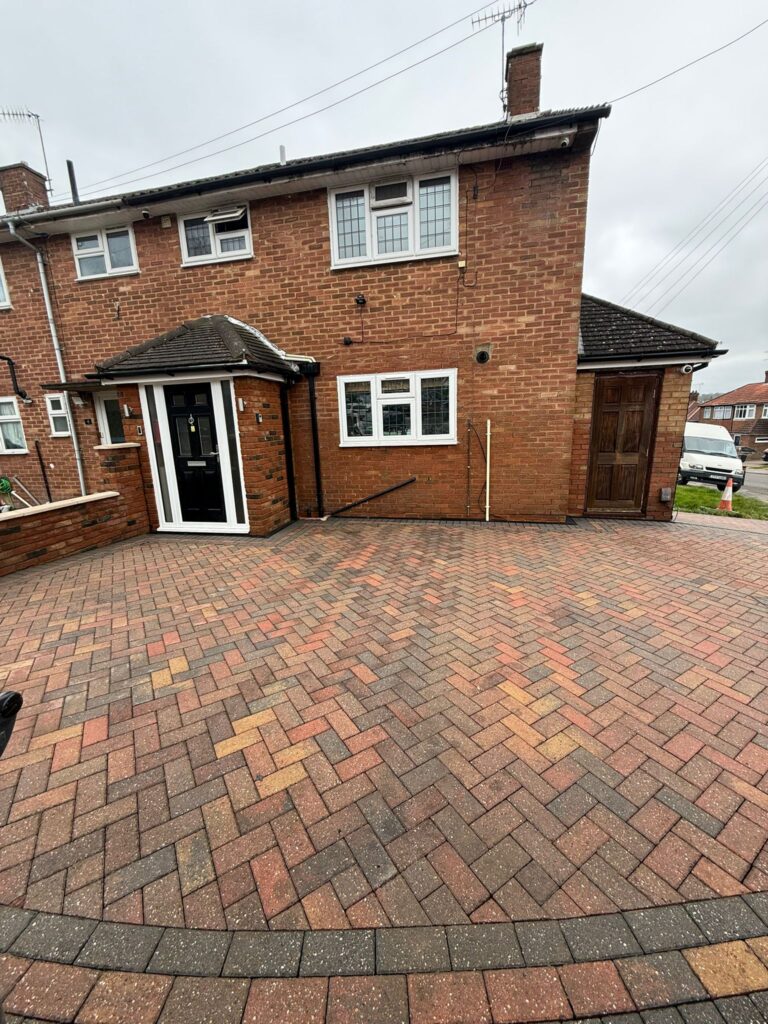
Expert Paving and Landscaping worked with residents in Costessey, Hellesdon, and Wymondham who made the switch from asphalt to block paving, and the results have been impressive.
Durability: A properly installed block paving driveway in Norwich lasts 15 to 20 years approximately. Tarmac cracks in winter and softens in summer. Asphalt needs resurfacing every five to seven years. Block paving just sits there and does its job. If one block does crack, you only need to replace that one block.
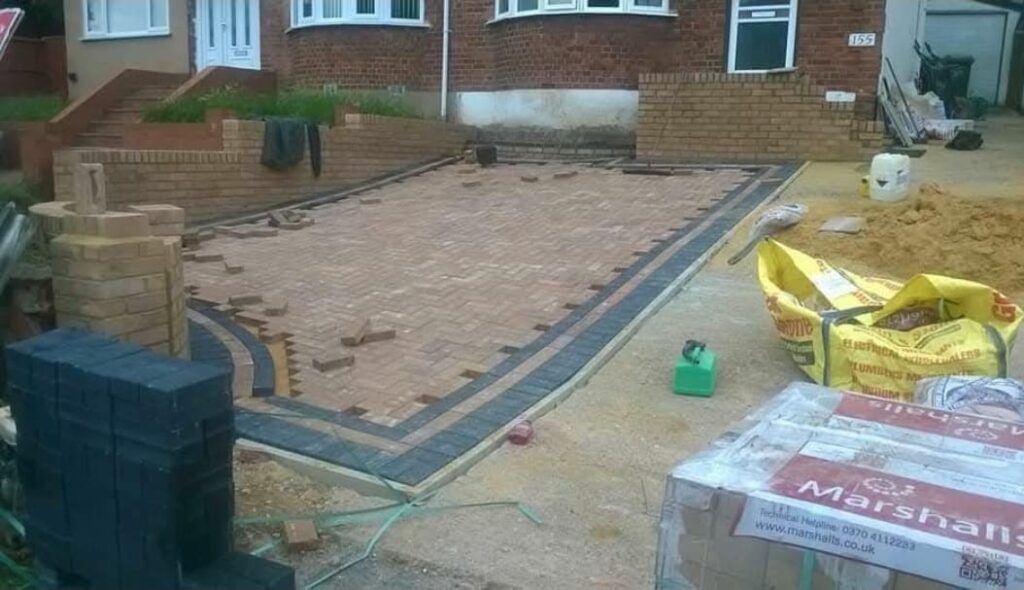
Aesthetic preference: We partner with Marshalls, the UK’s top block paving manufacturer, offering authentic choices for every property. Our range includes classic brick-style designs in earthy tones and warm reds for traditional homes and natural stone effects that mimic granite or slate. We also stock permeable blocks to enhance water drainage,essential for Norfolk’s clay soil.
Maintenance: Unlike tarmac or asphalt, block paving won’t absorb oil. An oil spill is easy to handle, simply rinse it away or give it a quick scrub with soapy water, and it won’t leave a permanent stain. This means your driveway maintains its appearance without constant pressure washing.
Why Your Block Paving Sinks (And How We Stop It)
In Thorpe St Andrew, we recently worked on a driveway that was 12 years old and had settled by up to 40mm on one side. The original installer had not done proper compaction and used too little sub-base material.
When we rebuild it, we did more than just place new blocks on the same base.
The foundation of any driveway that lasts is what happens before we lay a single paver. We start by removing everything, the old surface and sub-base, then we go deeper. Most contractors would stop there, but we don’t. Clay soil is the main issue in this area because it swells and shrinks depending on the moisture level, which is the main reason driveways crack and break down. We remove the clay and replace it with a solid stone foundation, which is layered and compacted properly. This work isn’t visible, but it’s essential for keeping your driveway strong and stable for many years.
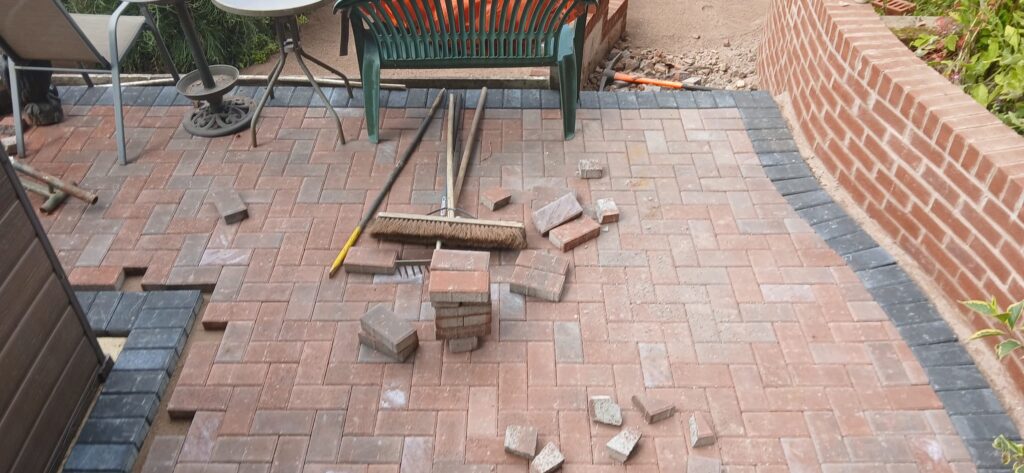
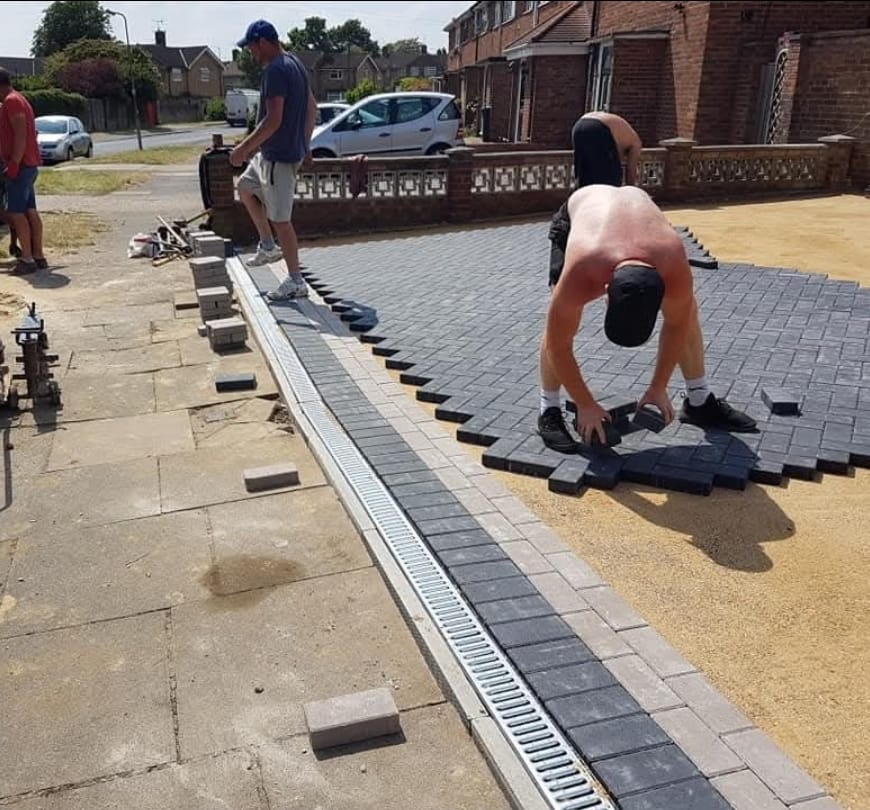
Once the foundation is strong, we ready the base and install Marshall’s pavers in a stretcher bond pattern. Many people see it as just decoration, but it’s designed to distribute weight evenly over the surface. That’s the difference between a driveway that holds up and one that sinks after a few years.
Professional Block Paving Sub-Base Installation in Norwich
Follow a 4-layer structural system to prevent damage to your driveway. What we do in these steps is explained below:
1: Subgrade Preparation
We dig down and remove soft clay and organic materials, then compact the soil properly. A weak foundation is asking for trouble, so we don’t skip this step.
Layer 2: Hardcore Base
We lay quality crushed stone and compact it to spread weight evenly. Good drainage matters to make sure water doesn’t pool underneath and cause damage.
Layer 3: Sand Bed
Sharp sand gets level perfectly flat for your blocks to sit on. Done right, you won’t get those annoying dips and bumps that show up later.
Layer 4: Blocks & Joint Sand
Blocks go down compacted, joints filled with polymeric sand, not regular sand, that’s a shortcut that fails. That’s how you get a driveway that lasts.
What We Know About Your Area That Matters
The natural soil is mainly clay with some areas of sand. The water level can be high during winter. We always use permeable block paving here because surface water runoff has limited space to drain in a densely built area.
Sprowston and outer Norwich: The soil is more diverse, but it is primarily clay. However, shallow utility lines for gas, electricity, and water may be present on some older properties. To look for these lines, we carefully dig the first 300mm. It can be dangerous and expensive if a mechanized digger strikes a pipe.
Hellesdon: Water drainage issues have always existed in this region. We incorporate a slight slope toward the street to help divert water away from building foundations.