
Garden Fencing Contractors in Norwich
Garden fencing is installed by setting posts into concrete at a depth of at least 600mm and fixing panels or feather-edge boards between them. In Norwich, a well-installed fence lasts 15 to 20 years, and post failure at ground level is the most common reason a fence blows down.
Fence Panels, Feather Edge or Closeboard: which should you choose?
Feather edge, also called close board, is built board by board on site. It costs more and takes longer, but it’s considerably strong and handles uneven ground far better, which matters in Norfolk where ground conditions are often uneven. Individual boards can be repaired or replaced without affecting the rest of the fence, making repairs simpler and more cost-effective.
On an exposed Norfolk boundary, where your fence faces open countryside, coastal wind, or poor site conditions, feather edge is usually the better long-term choice. On a sheltered suburban garden, panels are perfectly sound and make more financial sense. Contact us to discuss which works best for your property
Panel fencing is the fastest and most economical, and easy to replace one section at a time.
Feather edge (closeboard) is built board by board on site. It costs more and takes longer, but it is considerably stronger, handles uneven ground better, and can be repaired board by board rather than panel by panel.
On an exposed Norfolk boundary, feather edge is usually the better long-term choice. On a sheltered suburban garden, panels are perfectly sound.
Why fences blow down in Norfolk, and how post depth prevents it
Norfolk is flat, open and exposed, and takes wind straight off the North Sea. That makes a fence here work harder than the same fence in a sheltered county.
Almost every fence we are called out to replace failed in the same place,at ground level, where the post meets the soil. Timber rots there first, and once the post goes the panel follows.
Two things prevent it: posts set at least 600mm into concrete for a 1.8m fence, with the concrete domed at the top so water runs away from the post rather than pooling against it; and concrete posts with concrete gravel boards on exposed boundaries, which take the timber out of contact with the ground entirely.
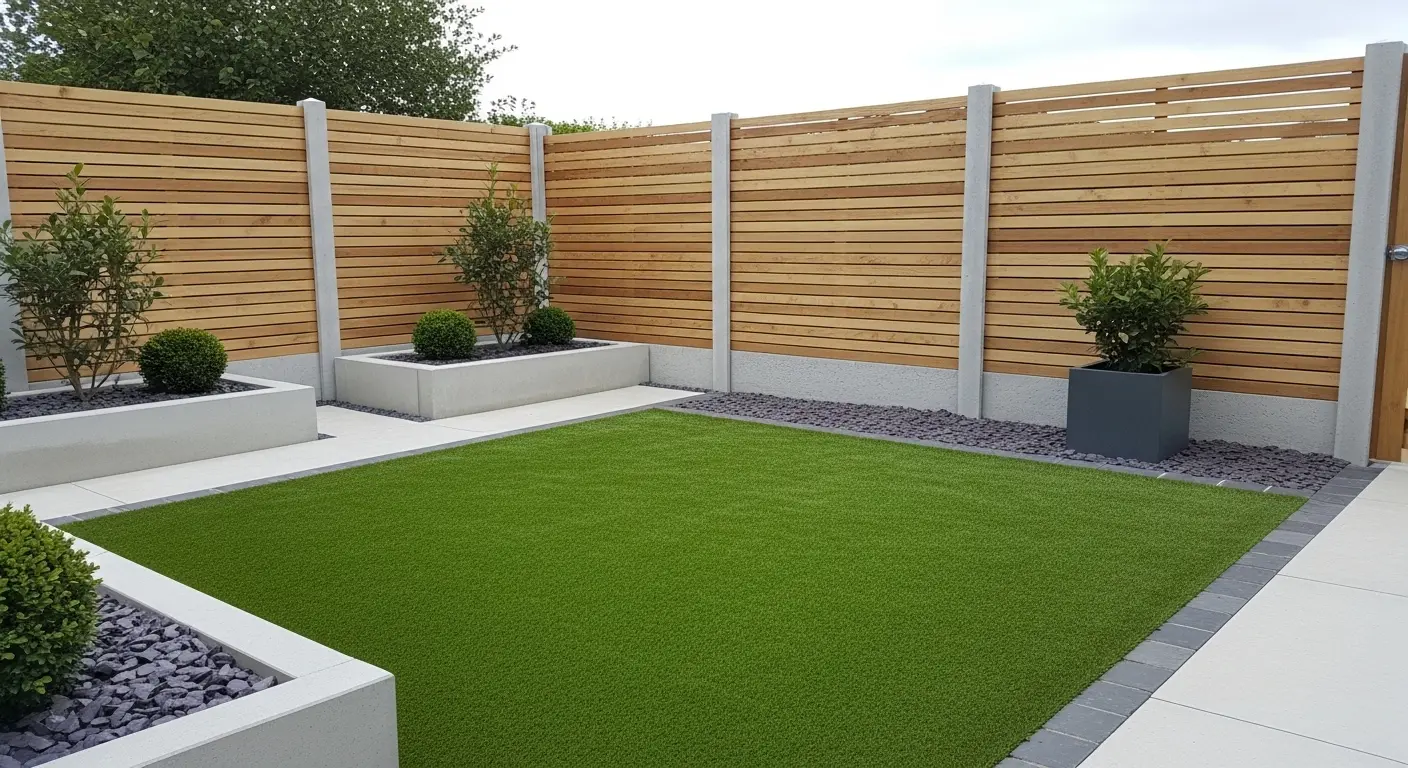
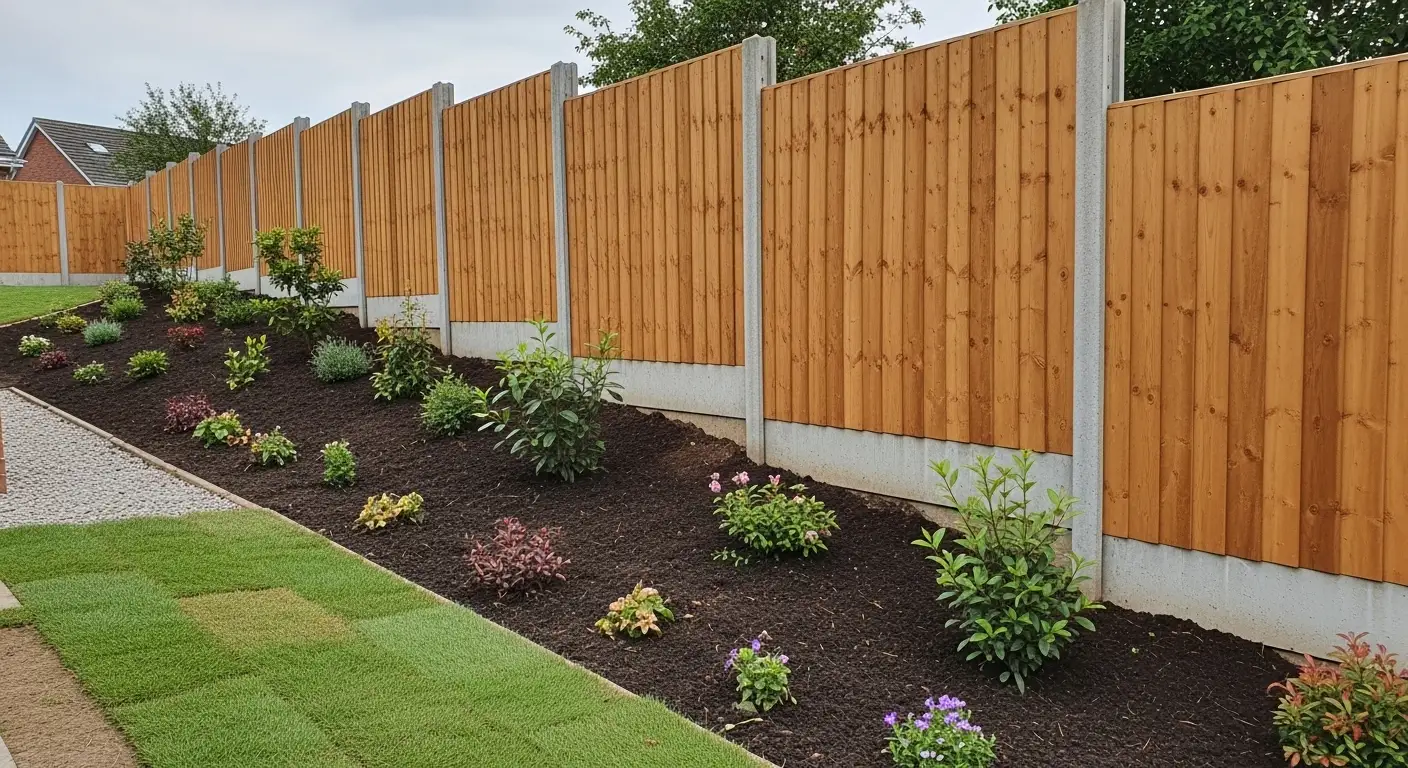
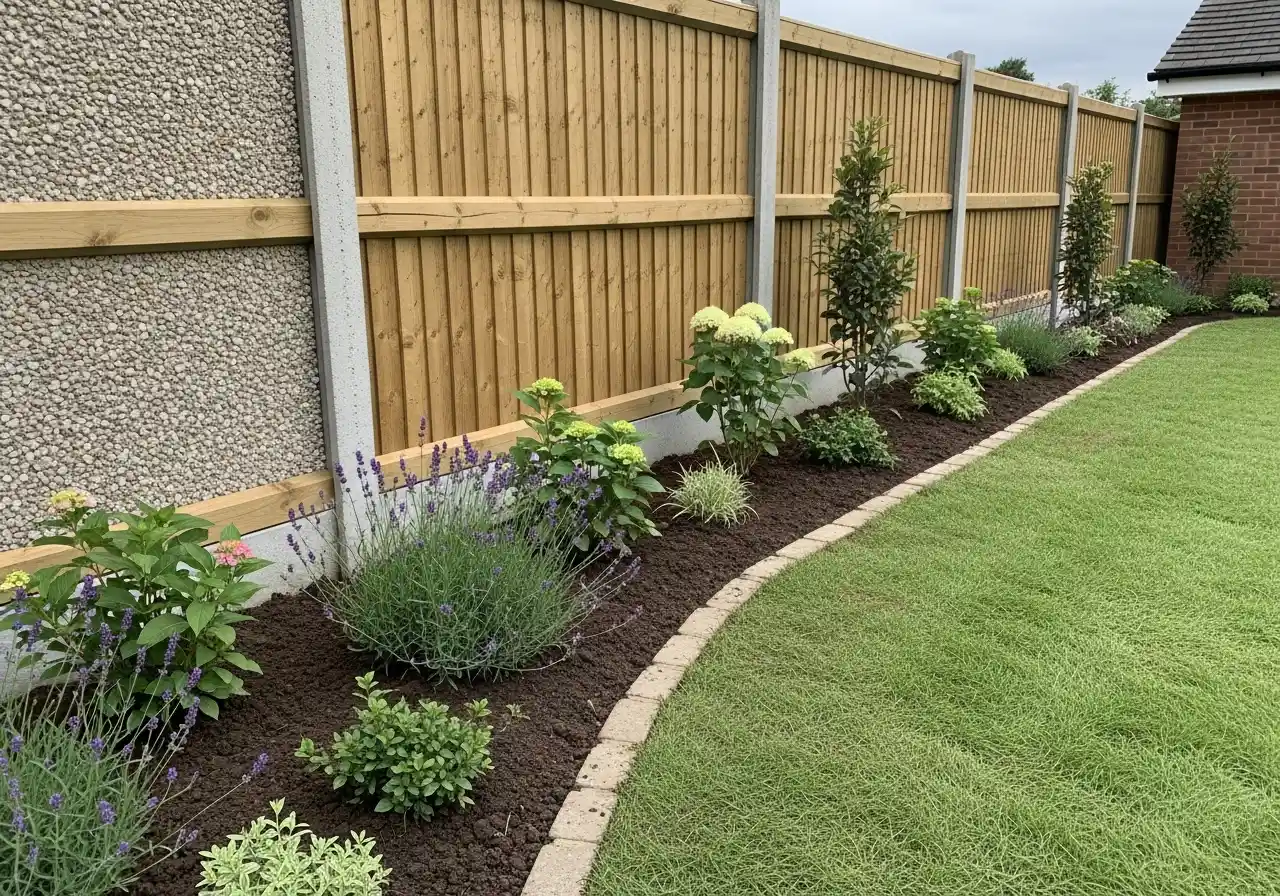
How much does Garden Fencing cost in Norwich?
Fencing is usually priced per panel installed, including the post, the gravel board and the labour. The main choice that moves the price is timber posts versus concrete posts. Concrete costs more upfront but does not rot at ground level, which is where almost every timber post eventually fails. Paired with concrete gravel boards, the timber panel never touches the soil at all. Over twenty years, concrete usually works out cheaper because it outlasts two timber replacements.
Ground conditions and access affect the labour more than the panels do. Hard or stony ground, restricted access, or removing an old fence all add time.
Every quote we give is free, fixed and itemised. Call 01603 858680.
Concrete posts vs Timber posts
Concrete posts do not rot at ground level, which is where almost every timber post eventually fails. Paired with concrete gravel boards, the timber panel never touches the soil at all.
Timber posts look softer and cost less. If the boundary is sheltered and appearance matters more than maximum life, they are a reasonable choice. On an exposed Norfolk boundary, concrete is the sensible one.
Fence Heights and Boundary Rules
You can build up to 2 metres in a rear or side garden without planning permission, and up to 1 metre where the fence borders a road used by vehicles. Different rules apply to listed buildings and conservation areas.
Ownership is set out in your property deeds look for a T-mark on the plan, which indicates the boundary is the responsibility of the property the T sits inside. Despite the common belief, there is no automatic “left-hand side is yours” rule. If the deeds are unclear, agree in writing with your neighbour before replacing a shared boundary.
Areas we cover for Fencing
We install garden fencing across Norwich and Norfolk, including Thorpe St Andrew, Sprowston, Costessey, Hellesdon, Old Catton, Wymondham and Dereham. See all areas we cover.
Fencing is usually the last stage of a wider job. Where a patio or garden landscaping is going in at the same time, sequencing them together avoids digging the same ground twice.
Fencing FAQs
How much does it cost to install a fence in Norwich?
Fencing is priced per panel installed, including the post, gravel board and labour. The main variable is timber versus concrete posts — concrete costs more upfront but usually outlasts two timber replacements. Ground conditions and access affect the labour more than the panels do.
How high can a garden fence be without planning permission?
Up to 2 metres in a rear or side garden, and up to 1 metre where the fence borders a road or footpath used by vehicles. Different rules apply to listed buildings and conservation areas. If you share the boundary, agree the height with your neighbour before work starts.
Should I use concrete or timber fence posts?
Concrete posts do not rot at ground level, which is where almost every timber post eventually fails. In Norfolk’s exposed, wind-driven conditions, concrete posts with concrete gravel boards are the more durable choice. Timber looks softer and costs less, but expect to replace it sooner.
Who owns the fence, me or my neighbour?
Ownership is set out in your property deeds, look for a T-mark on the plan, which indicates the boundary is the responsibility of the property the T sits inside. There is no automatic “left-hand side” rule despite the common belief. Agree in writing with your neighbour before replacing a shared boundary.
How deep should fence posts go?
At least 600mm into the ground for a 1.8m fence, set in concrete with a slight dome at the top so water runs away from the post rather than pooling against it. Shallower posts are the single most common reason a fence comes down in a Norfolk gale.
How long does a garden fence last?
15 to 20 years for a well-installed fence with concrete posts and treated panels. Timber-posted fences typically last 10 to 15 years. Lifespan depends far more on how the posts are set and drained than on the panels themselves.